America at 250 · Black media history

Black Press Exhibit

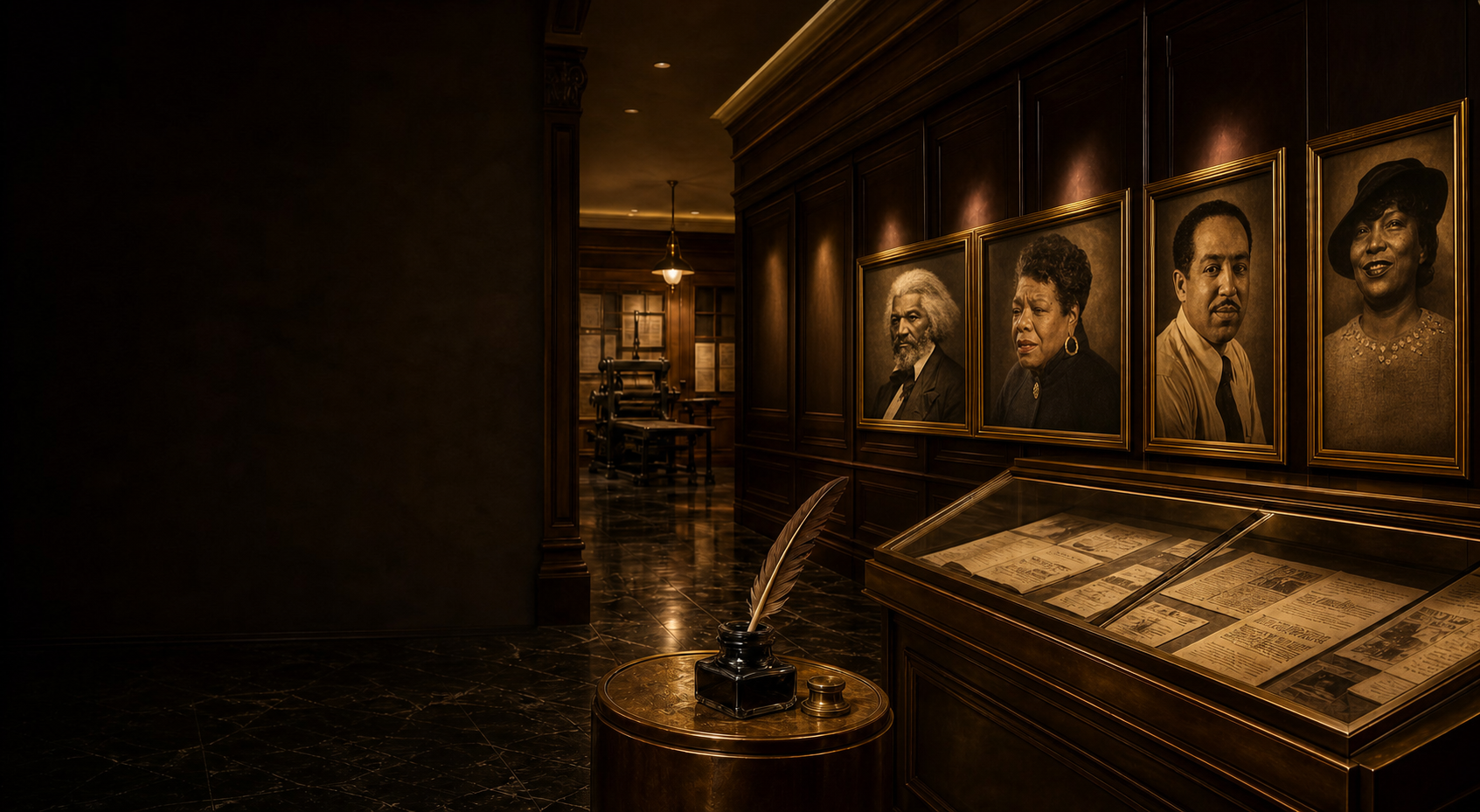
The Black Improper's digital exhibition on the first Black newspapers, magazines, journalists, publishers, and the history they preserved. This exhibit is built as a timeline for black news as it transcends through the ages.

America at 250

Inside theexhibit

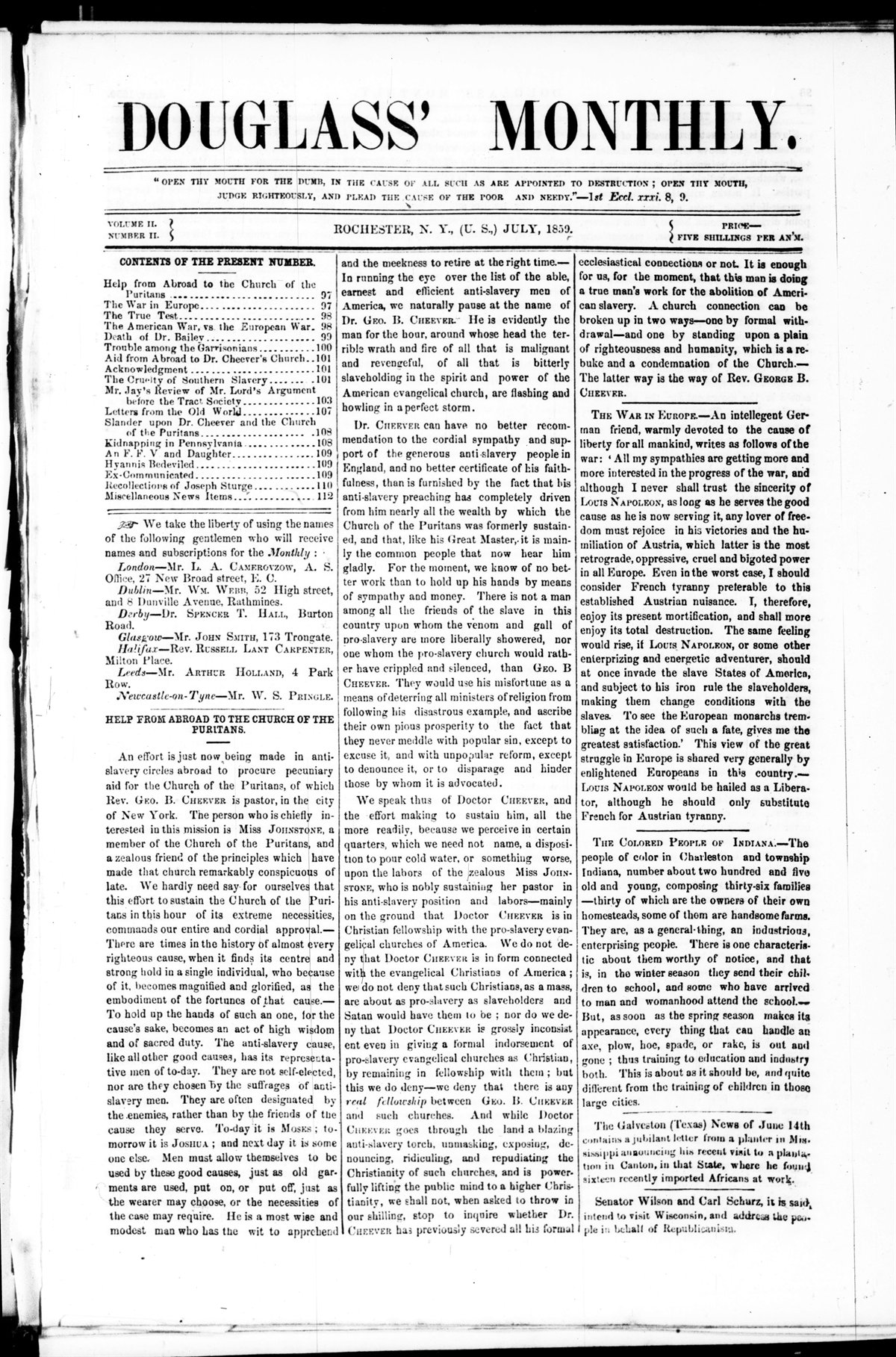
Douglass' Monthly, July 1859 issue scan
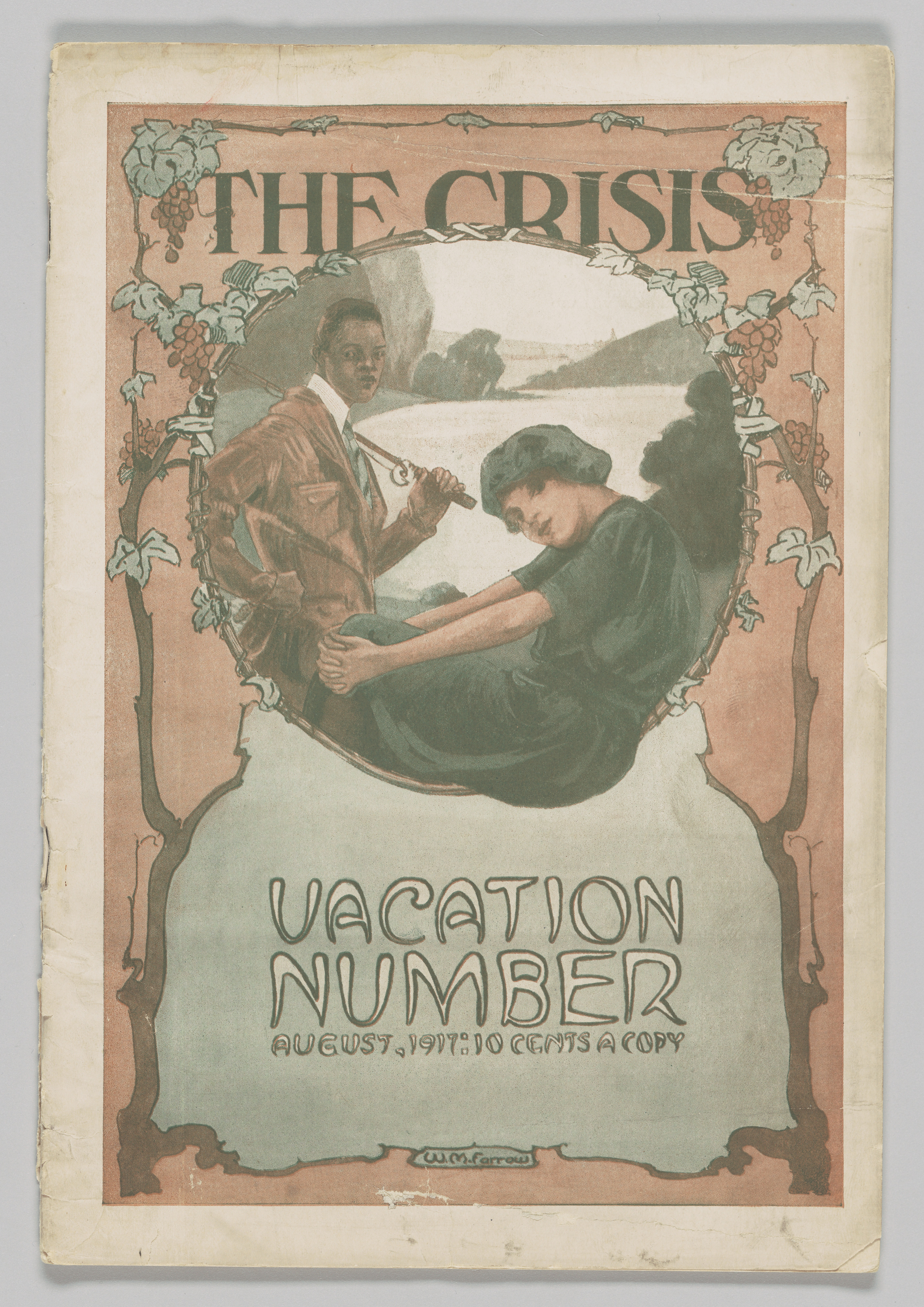
The Crisis magazine cover, August 1917
Ebony magazine cover, The Black Revolution special issue, August 1969

In 2026, the United States marks 250 years since the Declaration of Independence. In 1776, slavery remained legal and millions of Black people were excluded from the liberty the document declared.

Follow the newspapers, magazines, journalists, publishers, photographs, broadcasts, and community media that helped document Black life across generations. The story moves from the earliest Black newspapers through print, television, Ballroom documentation, digital publishing, and the media being built now.

Printing Freedom

Producing Black newspaper in the 1800's was physical and emotional labor. The argument on a page depended on the people who had the grit and means to illegally purchase, print, sell, mail, and read it. Just to share news across the enslaved and newly free black diaspora.

Typeset

Ink

Press

Publish

THE RESPONSIBILITY TO RECORD

Before digital publishing, putting Black life on the record was a perilous responsibility. Print itself was laborious: every word had to be typeset, inked, pressed, dried, and bundled before it could reach a reader. Add to that the laws and systems designed to prevent Black people from spreading information, and the stakes become even clearer. Still, the need for a Black press - to share news, document our lives, and communicate information vital to our safety - proved greater than the dangers and difficulties our ancestors faced in producing it.

And in many ways, the news itself has changed less than we would like to admit. Black newspapers once documented lynchings, racial terror, and killings that powerful institutions would have preferred to keep hidden or unchallenged. Today, Black journalists and communities are still called upon to document police killings, state violence, and the deaths of unarmed Black people when accountability is uncertain or absent. The technology has changed; the necessity of bearing witness has not.

Carrying the Truth

Black newspapers moved through subscriptions, churches, abolitionist networks, newspaper agents, rail routes, postal systems, and hand-to-hand community circulation. Distribution could meet censorship, bans, intimidation, and interference when antislavery writing challenged power.

Routes of circulation · 1827–present

1827-1859

The First Voices

1827

Freedom's Journal

New York, New YorkSamuel E. Cornish and John B. Russwurm

Widely recognized as the first Black-owned and Black-operated newspaper in the United States.

Its first issue appeared in March 1827, giving free Black communities a paper written under Black editorial control.

Samuel E. Cornish, a Presbyterian minister, and John B. Russwurm, an educator and journalist, opened their weekly with a refusal to let white editors define Black life. Alongside abolitionist argument, readers found poetry, education and church news, notices for Black businesses, boarding houses, and schools, and reports from a far-flung network of subscription agents. The paper made a practical claim: a community could own the press that carried its news.

1837

The Colored American

New York, New YorkSamuel E. Cornish, Phillip A. Bell, and Charles B. Ray

An early Black newspaper that argued for moral, social, political, and religious elevation while opposing slavery.

The paper grew from The Weekly Advocate into a national antislavery voice for free Black communities.

The Colored American inherited the Weekly Advocate’s readers and widened the conversation. Its pages argued over abolition, education, citizenship, emigration, the aid owed to freedom seekers, and even the names Black Americans should use for themselves. Samuel Cornish and Charles B. Ray were clergymen and abolitionists, but the paper did not read like a pulpit alone: it gave readers a place to encounter disagreement inside free Black political life.

1847

The North Star

Rochester, New YorkFrederick Douglass, with early assistance from Martin R. Delany and William Cooper Nell

Frederick Douglass used the paper to attack slavery, defend Black self-representation, and support equal rights.

Its motto declared: "Right is of no sex - Truth is of no color - God is the Father of us all, and all we are brethren."

In Rochester, Frederick Douglass built a weekly paper out of the conviction that an abolitionist speaker also needed an editorial desk. The North Star ran antislavery arguments, reports on Black rights, women’s-rights material, correspondence, and news from freedom movements beyond the United States. Its masthead carried a claim as clear as its editorials: Black political independence required a publication that could answer back every week.

1852

The Christian Recorder

Philadelphia, PennsylvaniaAfrican Methodist Episcopal Church

One of the oldest continuously published Black periodicals in the United States.

The AME Church paper carried religious, civic, and wartime news for Black readers across the country.

The AME Church renamed its paper The Christian Recorder in 1852, and its first editor, the Rev. M. M. Clark, sent a weekly into a network already held together by congregations, ministers, and correspondence. A reader could find denominational news beside marriages, obituaries, notices, education, and, during the Civil War, reports about Black regiments. The church network made distribution possible; the paper turned that network into a shared public record.

1859

Douglass' Monthly

Rochester, New YorkFrederick Douglass

Douglass' Monthly continued Douglass' newspaper work as the nation moved toward Civil War.

The Library of Congress notes that Douglass shifted toward a monthly publication as the war approached.

Douglass' Monthly was not a second North Star with a new name. In 1859, Douglass shifted to a monthly format, using longer space to interpret a nation moving toward war. The surviving July issue is the object here: a printed political forum where slavery, federal power, citizenship, and rebellion were addressed as immediate questions for Black readers.

1892

Afro-American

In 1892, The Afro-American began appearing on Saturdays in Baltimore. Early issues carried local news for readers in the city’s Northwest neighborhood, where Baltimore’s Black population was growing and several Black newspapers competed for attention.

John H. Murphy Sr. already knew how the paper worked: he had run its printing department. When the business failed and the machinery went to auction, he borrowed money from his wife, Martha, bought the equipment in 1897, and brought the paper back as editor. His editorials challenged wrongful arrests and lynching. After his death, his son Carl expanded the paper into editions serving Baltimore, Washington, Richmond, Philadelphia, and Newark. Those editions depended on people doing the daily work—printers setting type, editors choosing pages, correspondents sending news, and readers buying copies.

1905-1970

The Black Press Grows

By the twentieth century, Black publishers were reaching readers through regional editions, national weeklies, church networks, magazines, and photo-rich formats. These publications did not share one politics or one audience. Together, their pages show Black journalism becoming local, national, literary, visual, commercial, and international.

1905

Chicago Defender

Chicago, IllinoisRobert S. Abbott

A powerful Black newspaper associated with Great Migration advocacy and national Black readership.

Robert S. Abbott began the Defender in a landlord’s kitchen in 1905. For Southern readers weighing danger, work, and family, its pages paired lynching coverage with Chicago job information, letters asking for advice, and reports of Black urban life. White distributors often refused to carry the paper south; Pullman porters and other informal networks moved copies hand to hand. The Defender informed migration and argued for it, without being the sole cause of a movement driven by many forces.

Helped encourage the Great Migration by presenting Chicago and other Northern cities as places of work, safety, and possibility.

Used national distribution networks, including railroad workers and newspaper agents, to reach Black readers far beyond Chicago.

Became a major platform for civil rights reporting, anti-lynching coverage, political argument, sports, entertainment, and Black urban life.

1909

New York Amsterdam News

New York, New YorkJames H. Anderson

A major Harlem-based Black newspaper that became one of the leading Black papers in the United States.

The Amsterdam News grew with Harlem’s public life. Its reporters and editors tracked elections, labor, housing, churches, sports, civil-rights campaigns, and the arts alongside the weekly business of neighborhood life. The paper’s headquarters became a Harlem landmark; its pages made room for a tenant meeting, a political contest, and a cultural opening in the same civic field.

Founded in 1909 and rooted in the growing Black public life of New York City.

Expanded from a local paper into a nationally recognized Black newspaper with Harlem at its center.

Reported on politics, labor, arts, civil rights, religion, sports, and neighborhood life across generations.

1910

Pittsburgh Courier

Pittsburgh, PennsylvaniaEdwin Harleston and early partners; later led by Robert L. Vann

A nationally influential Black weekly, remembered for major civil rights and wartime campaigns.

The Courier’s national editions joined Pittsburgh to readers in Southern towns, Northern cities, and military communities. Its reporters covered politics, sport, culture, labor, and war; the Double V campaign became its best-known wartime intervention after a reader’s letter gave editors a sharpened question. That campaign did not contain the whole paper. It shows how a weekly with correspondents and a wide readership could turn a reader’s argument into national pressure.

Grew into one of the most widely read Black newspapers in the United States.

Helped popularize the Double V campaign during World War II: victory over fascism abroad and racism at home.

Published national reporting, opinion, sports, arts coverage, and work by major Black writers and correspondents.

1910

California Eagle

Los Angeles, CaliforniaJohn J. Neimore; later led by Charlotta Bass

A major Black West Coast newspaper and platform for civil rights organizing.

Charlotta Bass took control of the California Eagle after the death of her husband, Joseph Bass, and ran it for decades from Los Angeles. The newsroom followed housing discrimination, employment, schools, policing, and the city’s racial politics; Bass also used its pages to organize campaigns and press officials. A California Eagle issue is a reminder that the Black press was built on the Pacific Coast as well as in the better-known newsrooms of Chicago, New York, and Pittsburgh.

Traced its roots to The Owl before becoming the California Eagle.

Under Charlotta Bass, the paper fought discrimination in housing, employment, policing, schools, and public life.

Made Los Angeles part of the national Black press story rather than treating Black journalism as only an East Coast or Midwest institution.

1910

The Crisis

New York, New YorkNAACP; founding editor W. E. B. Du Bois

The NAACP magazine became a central publication for civil rights, arts, politics, and Black intellectual life.

At W. E. B. Du Bois’s editorial desk, The Crisis placed anti-lynching reporting, political editorials, photographs, art, fiction, and poetry within a single monthly. Jessie Redmon Fauset, its literary editor, read and placed emerging writers while the magazine’s visual work shaped how readers encountered Black modern life. A cover here is not decoration for the political record; it belongs to a magazine that made argument, evidence, and literary discovery share the same pages.

Served as the NAACP's magazine and a major platform for civil-rights argument and documentation.

Under W. E. B. Du Bois, combined investigative reporting, editorials, photography, art, poetry, fiction, and political analysis.

With Jessie Redmon Fauset as literary editor, became an important publishing ground for Harlem Renaissance writers.

1916

Norfolk Journal and Guide

Norfolk, VirginiaP. B. Young Sr.

A Norfolk weekly built by P. B. Young Sr. into one of the leading Black newspapers in the South.

The February 3, 1917 front page makes the Guide’s range visible: community announcements, business notices, education, church life, migration reporting, and the paper’s own print-shop work all appear in one issue. Young’s family and staff built the paper over decades, later adding local and national editions. Its editorial tone was often more restrained than Northern Black papers, but the newsroom still pursued voter participation, employment, schools, Scottsboro coverage, and defense-industry integration.

P. B. Young Sr. bought the four-page Lodge Journal and Guide in 1910 and remade it as the Journal and Guide.

The paper carried church, society, sports, education, business, civic, and political news alongside editorials.

Its newsroom reported under segregation while balancing local readers, advertisers, and widening editions.

1942

Negro Digest

Chicago, IllinoisJohn H. Johnson / Johnson Publishing Company

A compact national magazine for Black commentary, reporting, literature, and public debate; it became Black World in 1970.

Before Ebony and Jet, John H. Johnson assembled Negro Digest as a compact magazine of reprinted and original commentary. A reader could encounter political argument, literature, reporting, and cultural criticism in one small format. The 1942 issue in the Smithsonian collection includes work by Langston Hughes and an editor’s page by Johnson; by 1970 the publication had become Black World, where editor Hoyt Fuller helped shape a Black Arts forum.

Launched Johnson Publishing before Ebony and Jet, proving that a Black-owned publisher could build a national magazine readership.

Collected political argument, literature, culture, reporting, and debate in a format designed to circulate widely.

Established an editorial foundation for the publishing network that later made Ebony and Jet household names.

1945

Ebony

Chicago, IllinoisJohn H. Johnson

John H. Johnson launched Ebony in November 1945, three years after founding Johnson Publishing Company. Its first issue printed about 25,000 copies; by 2005, the Smithsonian records, Ebony reached ten million readers. The magazine moved through family life, politics, civil rights, business, travel, beauty, fashion, music, and the work of ordinary people.

Ebony’s photographs were not a decorative layer around the reporting. The magazine made Black life visible at national scale with a visual language broad enough to hold Jackie Robinson, the Black Revolution, and Diana Ross without treating any one register as the whole story. In 1958, Eunice W. Johnson began the Ebony Fashion Fair, carrying that publishing world into a traveling public event.

1951

Jet

Chicago, IllinoisJohn H. Johnson

Jet began as Johnson Publishing’s weekly in 1951. The Smithsonian’s first issue identifies it as “The Weekly Negro News Magazine”; at 5 13/16 by 4 3/16 inches, it was built to be compact. Its pages paired news with entertainment, politics, sports, beauty, and social reporting.

Jet carried a different rhythm from Ebony: a profile, a trial, a sports note, a photograph, a brief readers could pass along. In 1955, after Mamie Till-Mobley insisted on an open-casket funeral for her son Emmett Till, Jet published photographs that brought evidence of racial violence to a national Black readership. That decision belongs beside the rest of Jet’s lively weekly record, not above it.

1950-1955

Freedom

New York, New YorkFreedom Associates; founded under the leadership of Paul Robeson

A left-wing Black newspaper associated with Paul Robeson that published and employed writers including Lorraine Hansberry while covering civil rights, anticolonial struggle, labor, and Black culture.

Freedom’s staff treated a Harlem rent fight, a union struggle, an anticolonial campaign, and a world crisis as connected reporting. Paul Robeson was its public-facing leader; writers including Lorraine Hansberry worked inside its newsroom before their later reputations hardened into monuments. Published during the early Cold War, the paper offered reporting on labor, civil rights, women, peace, colonialism, and Black culture to readers looking for a deliberately international frame.

Connected Black freedom struggles in the United States to anticolonial movements around the world.

Gave Lorraine Hansberry a journalistic home before A Raisin in the Sun reached Broadway.

Published writing on labor, civil rights, women, peace, colonialism, culture, and state repression during the early Cold War.

1961

Freedomways

New York, New YorkFreedomways Associates, including Louis Burnham, Edward Strong, W. E. B. Du Bois, and Shirley Graham Du Bois

A major quarterly of Black political, cultural, and intellectual life published from 1961 to 1985.

Freedomways arrived as a quarterly rather than a breaking-news weekly. Under editor Esther Cooper Jackson, essays, criticism, art, and movement analysis gave readers time to connect a Southern campaign, a labor fight, African independence, and Black arts work. Its final position in this room is intentional: the magazine closes a period in which Black print had built local papers, national weeklies, glossy magazines, and an international political journal.

Created a sustained home for writing on Black liberation, labor, culture, international struggle, and political thought.

Made the global dimensions of Black freedom visible through essays, criticism, art, history, and movement analysis.

Under editor Esther Cooper Jackson, preserved debates and ideas that commercial media often left outside the record.

Black Journalism Changed America

Black journalism did more than answer a distorted national record. It investigated violence, circulated evidence, argued policy, connected readers across distance, and gave people information they could use. The stories below show some of the work that moved through Black-owned publications—not as a side note to American history, but as reporting that helped communities act inside it.

The Great Migration

Emmett J. Scott’s Negro Migration During the War (1920) is a contemporary study of Black movement during World War I. The case pairs it with the Chicago Defender’s reporting and advocacy, not as a single cause of migration but as information readers could use.

Emmett J. Scott’s 1920 study documented wartime migration. Before and during that movement, the Chicago Defender carried job notices, anti-lynching reporting, and accounts of Northern cities into Southern Black communities through newspaper agents and Pullman-porters’ networks.

Image Source: Internet Archive

Civil Rights

A Medical Committee for Civil Rights banner at the March on Washington on August 28, 1963. The object identifies one professional organization inside a much larger coalition; it is not a stand-in for every form of civil-rights reporting.

Black newspapers reported lynching, boycotts, court challenges, local campaigns, and mass meetings before much of the national press gave the movement sustained attention. Their reporting connected local organizing to readers beyond the immediate city.

Image Source: Library of Congress

Voting Rights

Demonstrators outside the White House demand voting rights and protest brutality in Selma. The photograph belongs to the 1965 campaign for federal protection of the ballot.

Coverage of disenfranchisement, intimidation, Selma, voter-registration drives, and federal action made voting rights a continuing Black press subject. It linked local organizing to the pressure that produced the Voting Rights Act of 1965.

Image Source: Library of Congress

Military integration

Tuskegee Airmen in training. This is not a Pittsburgh Courier Double V graphic; it is a separate wartime photograph that locates the campaign’s argument alongside the segregated military system Black service members faced.

In 1942, the Pittsburgh Courier turned James G. Thompson’s letter into the Double V campaign: victory over fascism abroad and over racism at home. The campaign made wartime service, employment discrimination, and citizenship part of the same argument.

Image Source: Library of Congress

Education

Elizabeth Eckford studies at home after officials blocked the Little Rock Nine from Central High School. The image belongs to a school-desegregation story shaped by students, families, courts, and local resistance.

Black newspapers followed segregated schools, unequal funding, desegregation lawsuits, and the students and families living with local resistance. Their pages kept court rulings connected to the people expected to enter changed schools.

Image Source: Library of Congress

Politics

Congresswoman Shirley Chisholm announces her candidacy for the Democratic presidential nomination in Brooklyn on January 25, 1972. Library of Congress photographer Thomas J. O’Halloran made the image.

Black publications covered campaigns, legislation, appointments, party fights, and local offices as practical civic information. Coverage of Shirley Chisholm’s 1972 campaign placed a Black woman’s presidential bid inside a longer debate about who could claim political power.

Image Source: Library of Congress

Arts

Aaron Douglas’s Jazz at Home (1925), an image from the Harlem Renaissance visual world that Black periodicals helped circulate, review, and argue over alongside literature and politics.

The Crisis and other Black periodicals commissioned, published, reviewed, and debated poetry, fiction, illustration, photography, and criticism. Editors made a reading public for Black modernism while the work was being made.

Image Source: Virginia Museum of Fine Arts

Culture

A collage of Jet covers from the Johnson Publishing archive. Jet began in 1951 as a weekly magazine; its covers point to the range of subjects the publication placed before readers.

A Black weekly could put music, sports, society, beauty, celebrity, grief, and political news in the same issue. Jet’s compact format made that mix a recurring part of everyday media life rather than an occasional cultural supplement.

Image Source: Getty Images

Business

Madam C. J. Walker—Preparations, an advertisement printed in The New York Age on January 17, 1920. The ad joined product marketing to a Black newspaper’s established readership.

Display advertisements, classifieds, business columns, and agent networks connected Black-owned firms with readers. That advertising also helped finance newspapers that reported on economic life excluded from many white-owned papers.

Image Source: Smithsonian National Museum of American History

Fashion

A Library of Congress Harlem portrait. It is a period photograph rather than a magazine page; it sits here beside the press coverage that documented fashion, beauty, and social life as editorial subjects.

Society pages, photo spreads, beauty advertising, and later Ebony and Jet fashion coverage made style a reported part of public life. They tracked designers, models, beauty workers, events, and the changing visual codes of Black urban life.

Image Source: Library of Congress

Community organizing

Poor People’s Campaign marchers near the Washington Monument and Lincoln Memorial. The photograph documents a national mobilization, while Black newspapers also circulated the neighborhood-scale information that sustained organizing between marches.

Meeting notices, church announcements, mutual-aid appeals, funeral notices, protest calls, and campaign updates turned local information into shared infrastructure. A march photograph captures one public moment; the weekly work also happened in the notices that told people where and when to gather.

Image Source: Library of Congress

1965

The Bay State Banner

Boston’s Black Press · Weekly Since 1965

The Bay State Banner museum display

A Living Newspaper

The Bay State Banner began in 1965 as Boston was fighting over schools, housing, urban renewal, and civil rights. Its weekly pages gave Roxbury, Dorchester, and other local communities a place to follow the decisions made at City Hall, in schools, at neighborhood meetings, and across Boston’s cultural life.

Historical Significance

Founded in 1965 by Melvin B. Miller and Otis Gates, the Banner opened after the Guardian folded, when Boston residents were confronting the consequences of school segregation, urban renewal, and busing. Miller later wrote that a communications medium was essential to social change; the Banner’s inaugural issue asked, “What’s Wrong With Our Schools?”

The paper turned that premise into weekly journalism. Its 1967 “Police Riot in Grove Hall” report described Boston police storming a welfare building in Roxbury and clubbing protesting welfare mothers. Across decades, the Banner reported housing, schools, electoral fights, businesses, the arts, and neighborhood institutions as Boston public life—not as an afterthought.

Founder

Melvin B. Miller

Miller did not build the Banner as a memorial to himself. He was its founder, owner, editor, and publisher for 57 years, running a small local weekly through contested Boston politics and public arguments. He sold it in February 2023 to Ron Mitchell and André Stark, a Black ownership team that kept the publication in local media hands.

The Bay State Banner publication mark
Masthead display: The Bay State Banner.
The Bay State Banner print edition cover dated July 9, 2026

A Living Newspaper

A July 9, 2026 issue of The Bay State Banner.

This is a current print edition, not a commemorative artifact. The Banner continues to publish a weekly newspaper alongside daily digital updates.

View Source
Black Enterprise magazine cover about Black companies going public

1970 · Business, ownership, and corporate power

Black Enterprise

When Earl G. Graves Sr. put the first issue of Black Enterprise on newsstands in August 1970, he gave Black business its own national reporting desk. The magazine treated ownership, management, capital, careers, and corporate power as subjects that required sustained information—not a special-interest sidebar.

Black Enterprise offered practical reporting for people starting companies, seeking advancement inside corporate America, and trying to understand the barriers that shaped access to money and opportunity. It profiled entrepreneurs and executives while making room for the mechanics behind the headline: how a company grew, how a career moved, and where Black ownership stood in the wider economy.

A business record that could be counted

A 1973 Black Enterprise cover announced “The Nation’s 100 Top Black Businesses.” The Smithsonian preserves that issue. Lists and directories like this made Black enterprise visible as a field of companies, revenue, leadership, and employment—not an occasional inspirational anecdote.

BET logo

BET logo, used here as a historical media identifier.

Logo source

1980 · National Black television

BET: A National Black Media Institution

When Black Entertainment Television began airing in 1980, Black newspapers and magazines had already spent more than a century building places to report, argue over, and circulate Black life. BET was not a newspaper on television. It was a Black-centered cable outlet that changed the scale at which interviews, music, public affairs, personalities, and debate could move across the country, at a time when broadcast television often treated Black audiences as an afterthought.

Terrence J, Rocsi, former co-hosts, and guests on the 106 & Park ten-year reunion stage

Airing culture in public

106 & Park and the public life of Black popular culture

BET’s 106 & Park made the studio audience, music video, interview, and artist appearance part of one national conversation. This official BET gallery image records its ten-year reunion.

Image source: BET

BET began as a two-hour weekly program block and became a full cable channel in 1983. Its schedule put Black performers, hosts, interviewers, music, public affairs, and everyday conversation in homes across the country. An artist, a political argument, a style, or a regional sound could travel through voice and image with a speed print could not match.

Video Soul, Rap City, Teen Summit, BET News, and later 106 & Park gave Black audiences programs where the culture set the terms. The shows made room for artists, young people, interviews, studio audiences, and debate while those moments were still unfolding. Print kept a durable written trail of bylines, quotations, and argument; television carried timing, performance, and visual presence. They are different forms of Black media, and both changed who could be seen, heard, and followed.

Why BET belongs here

A national Black audience changed the scale of the cultural record.

BET made national circulation of Black images, voices, and debate an everyday television fact. It also makes the next question unavoidable: what survives when the platform that carried that record changes?

1980–2000

HIV/AIDS: A Need For Proper Black Reporting

During the HIV/AIDS epidemic, information could be life-saving. Media access was part of survival: those who could find reliable information, circulate it, and make it understandable changed the way Doctors actually handled black and queer bodies during this time. Black queer and trans communities were living with fear, stigma, changing medical knowledge, loss inside their own circles, and public communication that was often late, incomplete, or untrustworthy. Mainstream journalism, public-health agencies, gay and queer press, Black press, Black queer publications, organizers, and community groups each carried different kinds of information.

Those routes overlapped without becoming one coordinated system. Gay and queer outlets reported on a crisis that much mainstream coverage mishandled or ignored; Black press collections retain AIDS-era reporting; Black queer organizers and health organizations built targeted prevention, testing, and referral work. People also relied on peers and trusted social networks to translate what a headline, pamphlet, or clinic notice meant in real life. The history belongs in this exhibit because media access was part of survival: who could find reliable information, who could circulate it, and who could make it usable mattered enormously.

Ballroom documentation · 1990s into the digital present

Meanwhile, Ballroom Was Documenting Itself

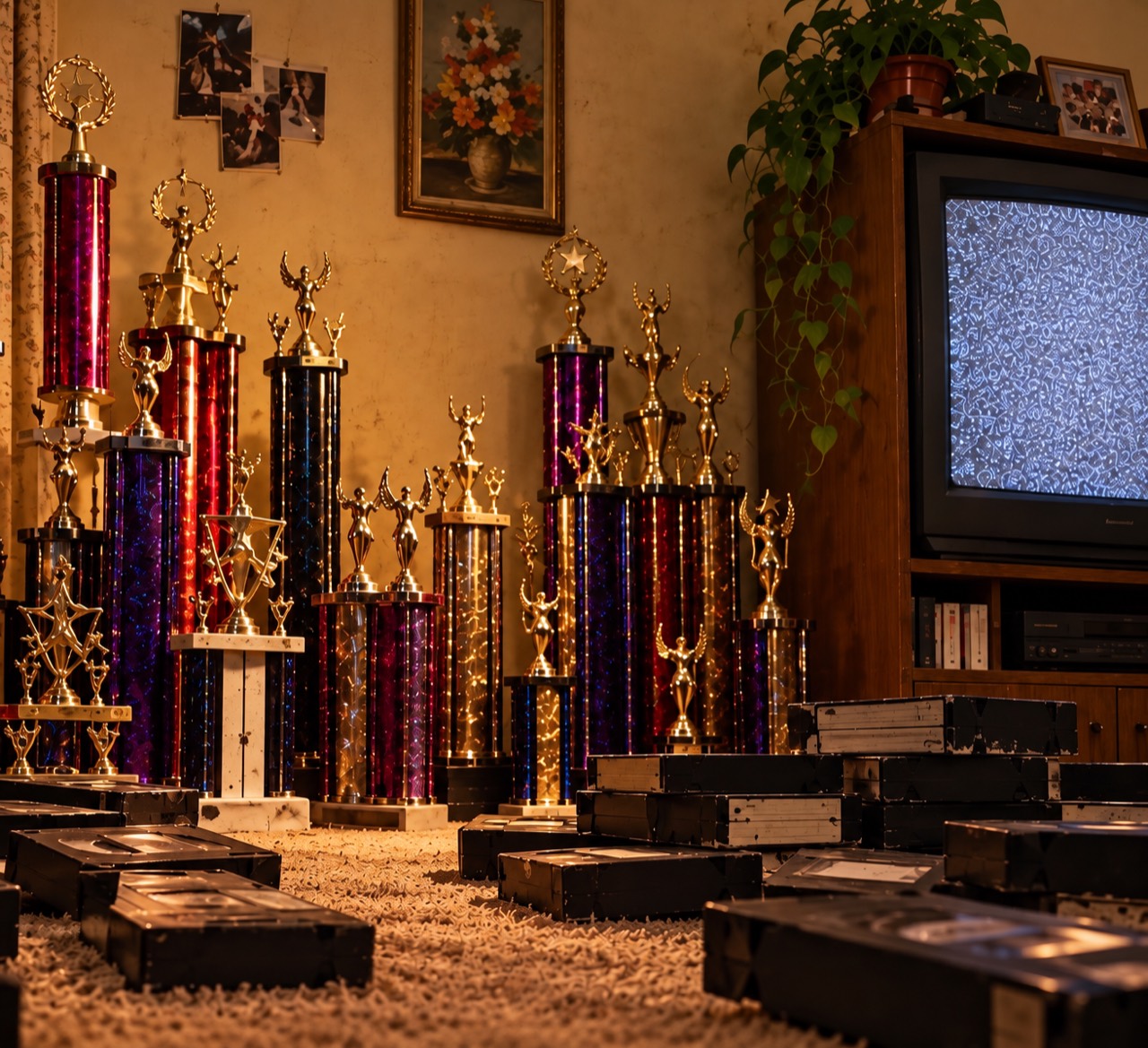
VHS tapes are what kept the ball alive after the lights came on. Before social media, searchable clips, or livestreams, someone could record a ball, bring the tape home, replay a category, pass a copy to a friend, or see what happened in another room or city. The tape held more than results: MC commentary, music, judging, crowd reactions, fashion, movement, rivalries, and the pace of the night.

Flyers did a different job. They told people where to go, when the ball started, who was hosting, what categories were called, and what prizes were on the floor. The flyer got people to the ball. VHS helped a recorded ball keep moving after it was over. A flyer was not a newspaper, and a VHS tape was not an article. They were forms of community documentation—materials created, kept, traded, and saved by people in and around Ballroom.

A dispersed archive

No single office assigned this work. Alvernian Prestige kept paper and photographs; Stephanie Coleman filmed a night in Chicago. Their materials sit beside organizers, house members, photographers, and collectors who kept records that could otherwise have been lost or left without context.

Keeper of flyers and local scene materials

Alvernian Prestige

Paper / ephemera · 1990s–2000s

The Peabody Ballroom Experience credits Baltimore flyers from the 1990s and 2000s to Alvernian Prestige. In a Johns Hopkins oral-history transcript, Alvernian recalls having early-1990s ball flyers. He kept paper that could easily have been discarded. Because it remained, a visitor can still read a date, a theme, a lineup, and details from one local night.

Courtesy of Alvernian Prestige

Object source: Johns Hopkins Sheridan Libraries / Peabody Ballroom Experience

Videographer of a documented Chicago Ballroom tape

Stephanie Coleman

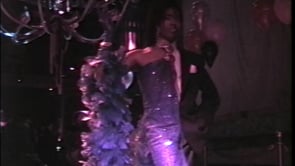
Video still from Media Burn Archive’s 1992 St. Valentine’s Day Massacre Ball recording with the House of Avant Garde
▶Watch the full video at Media Burn Archive

Video / tape · 1992 · Original format: VHS

Stephanie Coleman filmed the House of Avant Garde’s 1992 St. Valentine’s Day Massacre Ball. Her VHS keeps the commentary, music, runway, judging, crowd reaction, and pace of a night that a results list cannot supply. It also includes an announcement that copies would be available for sale: direct evidence that the tape was meant to travel beyond the room.

Media Burn Archive · Videographer/producer: Stephanie Coleman

Object source: Media Burn Archive

From tape to digital access

Ballroom Throwbacks / BRTB

From tape to wider access

Portrait of Ceasar Williams in New York City, 2000–05

A leading trailblazer in Ballroom’s online archive

Ceasar Williams

2000–05

Ceasar Williams is one of Ballroom’s leading archive trailblazers. After filming balls on and off since 1997, he began uploading older footage to Ballroom Throwbacks in 2009. That gave recordings viewers thought were lost a large YouTube following and a durable route beyond the room. The fuller BRTB feature below follows what that wider access made possible.

Featured BRTB footage

Legendary Kassandra Ebony LSS 2014 · Ballroom clip

Featured BRTB footage of Kassandra Ebony. This clip is presented as community documentation alongside the Museum’s account of how Ballroom material moved from scene-held media into wider digital access.

Source: BRTB TV on YouTube

Ballroom footage did not become history when it reached YouTube. It was already on tapes, discs, and in private collections. BRTB changed who could reach it: viewers could search, replay, share across geography, and encounter performances and categories without having been in the city or room where they happened.

Harper’s reports that Ceasar Williams began uploading older Ballroom footage to Ballroom Throwbacks Television in March 2009, after filming balls on and off since 1997. He described the early uploads as material viewers thought was lost and wanted younger generations to see. The channel grew from those uploads into ongoing coverage, interviews, and videos from current balls.

In Vogue’s oral history, Michael Roberson credits Ceasar Will with creating Ballroom Throwbacks and being the first to digitize old Ballroom footage for YouTube.

Open YouTube Archive

From the ballroom floor to mass media

Black Press Pushed Ballroom to achieve Willi Ninja's Dream of Vogue becoming "Worldwide"

In Paris Is Burning, The Pioneer Willi Ninja said he wanted voguing “to be known worldwide.” He imagined the form crossing borders, reaching fashion and popular culture, and making a larger professional future imaginable for dancers from the scene as His own career moved among Ballroom, dance, fashion, and music.

That reach arrived through different kinds of media. Paris Is Burning documented an earlier New York scene; Kiki followed a later generation of young Kiki-scene participants and community life. Pose was scripted television, built with Ballroom consultants, choreographers, performers, and producers who helped shape its houses, categories, language, and family structures without claiming the show invented them. Legendary put competing houses, an MC, Ballroom figures, and category-based performance into a streaming competition format; it offered paid television work and a much larger audience, while necessarily changing the time, rules, and context of an actual ball.

Downtown New York and Atlanta · 1976–1989

Nelson Sullivan: A Camera Inside Queer Nightlife

YouTube · 5 Ninth Avenue Project

RuPaul’s Life at the Jane West Hotel

Sullivan’s 1986 footage preserves RuPaul as a working performer years before later mainstream television fame. It documents a performer in the social and working spaces around a night out; it does not claim that Sullivan created RuPaul’s career.

Source: 5 Ninth Avenue Project on YouTube

YouTube · 5 Ninth Avenue Project

Nelson Sullivan Meets the Stars of the Pyramid Club in 1985

Filmed in July 1985 as Sullivan was getting to know Pyramid Club performers, this public upload gives the feature a second piece of evidence: a club room, performers, and the social world around a downtown night.

Source: 5 Ninth Avenue Project on YouTube

The Museum does not host Sullivan footage. The embedded player streams a public upload from the 5 Ninth Avenue Project; NYU states that copyright and related rights were not transferred with the collection, and permission for new use must be secured from the rights holder.

1993–2010s · Radio to digital

Radio Reached the City. The Feed Changed How it was Circulated.

Radio answered a different problem: distance. It carried music, interviews, personalities, and local conversation beyond a particular room and into the daily routines of listeners across a city.

A local signal made a citywide route for music and conversation that already lived in Boston.

Boston radio bridge

JAM’N 94.5: A Boston Signal

When WJMN became JAM’N 94.5 in 1993, it replaced a pop Top 40 format with an urban-leaning one. Boston hip-hop already had artists, DJs, and local radio spaces in Roxbury, Dorchester, Mattapan, Cambridge, and elsewhere. JAM’N did not create that culture. It gave hip-hop, R&B, artists, and cultural conversation a reliable citywide broadcast route, reaching listeners far beyond one neighborhood or venue.

That reach mattered in ordinary time. A record, a local interview, or a call-in conversation could turn up in a car, a kitchen, a barbershop, a school morning, or a shift at work. Radio made a citywide relationship to music and talk more regular: not one special event, but part of the week’s rhythm.

Radio, replay, and a durable conversation

The Breakfast Club: Radio Outlives the Clock

The Breakfast Club began on Power 105.1 in New York in 2010. It belonged to a morning-radio tradition built on host chemistry, recurring conversation, celebrity interviews, and listeners who came back for the show each day.

Podcasting did not have to invent the radio interview from scratch. Shows like The Breakfast Club already had the personalities, recurring conversations, celebrity interviews, and loyal listeners. Digital distribution changed the clock: an interview that once belonged to a morning broadcast could be downloaded later, watched as video, clipped into individual moments, and passed around after the microphones went quiet.

In 2020, its replay podcast became the flagship show at the launch of iHeartMedia and Charlamagne Tha God’s Black Effect Podcast Network. The program remained a live morning broadcast while its conversations took on a longer, on-demand life.

One billion

podcast downloads

In June 2025, iHeartMedia announced that The Breakfast Club podcast had surpassed one billion downloads.

Black media online

The Digital Age of the Black Press

The form kept changing: printing machinery and delivery routes became national magazines, television signals, tapes, websites, search, and social distribution. Online publishing let Black media file faster, cross city lines, combine text with video and audio, and reach readers without a printing plant or cable slot. It could also make an old issue or a scene-held tape searchable far from where it began.

That convenience came with a new dependency. Access now rests on servers, platforms, ownership, links, and corporate decisions as much as on paper and broadcast schedules. BET’s removed written archive is one warning. The institutions below arrived online by different routes: a nineteenth-century newspaper adapting its work, legacy publishers pooling a newsroom, digital-native outlets building national audiences, and a nonprofit newsroom reporting with local communities.

A legacy newsroom online

AFRO: A Baltimore Weekly, Online

The Baltimore weekly visitors met earlier no longer reaches readers only through a printed Saturday edition. Current AFRO stories travel through its website, phone screens, links, and search, where a reader can find new reporting without waiting for a paper to arrive.

Library of Congress scans let visitors open nineteenth-century AFRO pages; the newsroom still publishes current reporting online. Both belong to the same newspaper history. The press, paper, bundles, and routes changed into websites, phones, and links, but AFRO did not begin with the internet.

Digital-native · 2009 to the present

TheGrio: News Built for the Platform Era

TheGrio launched in 2009, then was acquired by NBC News in 2010. In 2016, Byron Allen’s Entertainment Studios acquired the platform, describing plans to expand its reach across digital, broadcast, cable, and film distribution.

Its current operation moves among news, politics, culture, entertainment, video, and a cable network. That trajectory is different from AFRO’s: TheGrio began as an online publication and developed into a multiplatform media property. Together, the two institutions show that “digital Black media” is not one business model, one audience, or one route to publication.

The Feed Becomes the Publication

The Shade Room: The Feed Becomes the Publication

Angelica Nwandu founded The Shade Room in 2014. It lived where many readers were already spending time: social networks. A post did not stop at the headline. People replied in the comments, tagged friends, traded screenshots, sent tips, and carried a story into group chats and other feeds. The company calls that audience its “Roommates,” but the larger point is practical: readers were not only receiving the outlet’s work. They were helping decide how far a story traveled and what conversation gathered around it. That closeness increased speed and reach while making verification, context, platform rules, and ownership part of the daily work.

A digital-media ecosystem, not one route

Hollywood Unlocked: Digital Moves Back Into Broadcast

Jason Lee’s Hollywood Unlocked began online in 2015, then moved into a 2019 Premiere Networks radio partnership and later FOX Soul. Its route ran opposite to The Breakfast Club: a digital-native outlet carried an audience back into broadcast.

The Neighborhood Talk: A Digital Lineage

Kyle Anfernee started The Neighborhood Talk in 2018 after working at The Shade Room. He described an online neighborhood built around Black culture, issues, humor, and conversation—a related but distinct editorial voice growing from the same digital-media generation.

By the time publishing moved into feeds, podcasts, and video, a story could arrive where its audience already gathered—and be answered, forwarded, clipped, and argued over there. The next gallery follows the Black media institutions working inside that new condition.

Other digital Black-media models

Capital B News logo

Capital B

A nonprofit newsroom launched in 2022 by Lauren Williams and Akoto Ofori-Atta.

Capital B pairs national reporting with local newsrooms in Atlanta and Gary. Its reporting model starts with community listening and focuses on public decisions affecting Black residents, including housing, health, education, and government.

Logo used for identification only. It links the card to Capital B as a living digital newsroom and does not imply partnership or endorsement.

Visit
Word In Black logo

Word In Black

A national newsroom formed in 2021 by ten established Black publishers.

The ten members include AFRO, The Atlanta Voice, the New York Amsterdam News, and the St. Louis American. They keep their local identities while pooling reporting and research through a shared national digital route.

Logo used for identification only. It helps visitors recognize the collaborative publisher network without suggesting sponsorship or endorsement.

Visit
The Root logo

The Root

A digital-native national publication founded in 2008 by Henry Louis Gates Jr. and The Washington Post Company.

The Root was designed for online reporting, commentary, politics, culture, and historical context from the start. Its founding placed a Black-focused digital publication inside a major national media company’s internet-era experiment.

Logo used for identification only. The mark identifies The Root as a digital publication in this exhibit context and does not imply affiliation.

Visit
Blavity News logo

Blavity

A digital media company founded in 2014 by Morgan DeBaun, Aaron Samuels, Jonathan Jackson, and Jeff Nelson.

Blavity began with a Black millennial digital audience, then grew into a portfolio that includes AfroTech, 21Ninety, Travel Noire, and Shadow and Act. Its story is about a newsroom expanding into technology, events, culture, and specialized media brands.

Logo used for identification only. It marks Blavity as a contemporary Black digital media company without implying partnership or endorsement.

Visit

Boston · 2022 to the present

The Black Improper magazine masthead

The Black Improper

The Black Improper began in 2022 as a ballroom education resource, throwing balls for Boston Pride and working with Gay/Straight Alliances to bring ballroom to colleges. TBI was built to help preserve and explain the culture, language, history, and people of the Boston ballroom scene.

Over the next several years, that work revealed a broader need. Ballroom, Black queer nightlife, art, and community life were all producing history in real time, often without a dedicated place to document it.

The publications in this exhibit all were born from a similar need.

Black publishers built newspapers when their communities were omitted or distorted. No one can write our history better than we can. Preserving it is both a responsibility and a calling: to make sure our people, our spaces and our work are remembered in our own words, not only through whatever version someone else chooses to see. TBI hopes to be a contemporary part of that ongoing work: a magazine, event resource, cultural archive and multimedia platform documenting Black and queer life in Boston and beyond.

This digital exhibit was incepted, curated, written, and assembled by The Black Improper. Historical facts and archival references are credited through the source ledger; the exhibit concept, sequencing, interpretation, and presentation belong to TBI.